All course stories
Dr. Sreenivasan
Mays Business School, Texas A&M

How one professor built assignments students couldn’t Google

200+
students
Futuristic products
students couldn’t search
Discussion boards
replaced with simulations
Since 2024
used across multiple semesters
Background

Experiential learning, built from scratch

Dr. Sreenivasan used Cartedo across multiple courses at Texas A&M’s Mays Business School to support experiential learning.

She wanted students to work on problems that felt new, uncertain, and hard to solve with a quick search. Instead of relying on generic cases or canned simulations, she created custom scenarios around futuristic products, emerging markets, and business models without obvious answers.

Cartedo gave her a way to build experiential assignments around her own course sequence, content, and teaching goals.

The challenge

Generic assignments were too easy to outgrow.

In an AI-enabled classroom, generic assignments can become fragile. Students can search for similar answers, rely on canned examples, or use AI to produce a polished response without wrestling with the actual problem.

Dr. Sreenivasan wanted assignments that forced students to reason through uncertainty.

Hard to assess
Could students reason without a pre-existing answer?
Could they analyze a market that did not already exist?
Could they make pricing decisions under uncertainty?
Could they evaluate competitors when there were no obvious competitors?
Could they defend assumptions?
Could the simulation match the instructor’s exact course flow?

The shift

Course ideas became custom simulations.

Cartedo helped turn Dr. Sreenivasan's futuristic product ideas and emerging-market scenarios into course-ready simulations. Students worked through challenges such as pricing a new kind of product, analyzing uncertain competition, evaluating new market demand, and making product strategy decisions without obvious benchmarks.

The course moved away from generic assignments and toward custom experiential learning. Students could not simply Google the companies or use LLMs to answer.

They had to think.

The decision loop under uncertainty
1
Frame

Students enter a novel product or emerging-market scenario.

2
Make assumptions

They state assumptions where no benchmark exists.

3
Decide

They choose a product or market strategy and own it.

4
Get feedback

Cartedo gives targeted, rubric-aligned feedback.

5
Defend & refine

They justify the call and improve across scenarios.

Simulation examples

Futuristic scenarios students couldn’t search

Choosing Neendh’s Next Product Extension simulation preview
Choosing Neendh’s Next Product Extension

Students evaluate market data to recommend and defend a product-line extension.

Starting Your Marketing Role simulation preview
Starting Your Marketing Role

Students navigate their first marketing assignment, setting priorities and expectations.

Defending Spend Under Scrutiny simulation preview
Defending Spend Under Scrutiny

Students justify a marketing budget when leadership challenges the return on spend.

Turning Sentiment Into Messaging simulation preview
Turning Sentiment Into Messaging

Students translate customer sentiment data into clear, on-brand campaign messaging.

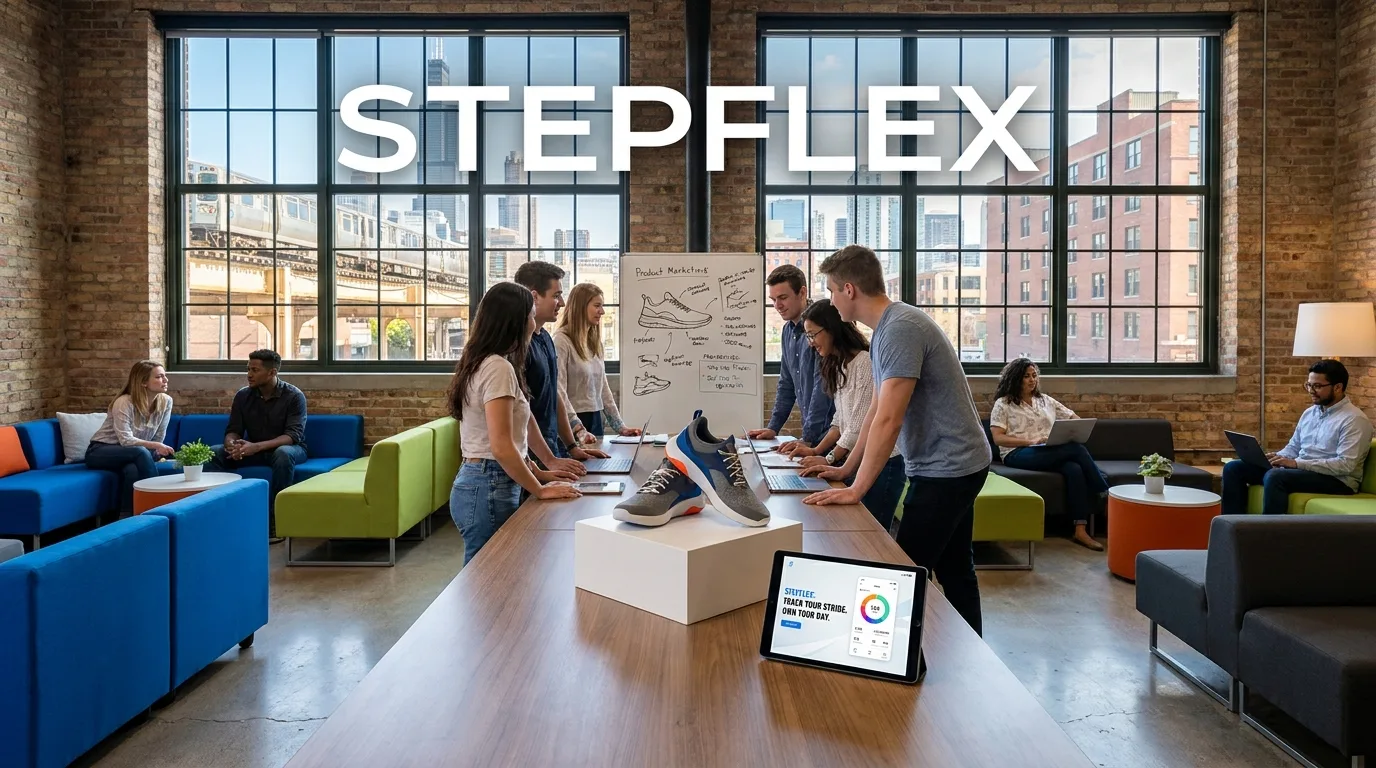
Positioning StepFlex for Launch simulation preview
Positioning StepFlex for Launch

Students craft positioning and a go-to-market angle for a new product launch.

The outcome

Instructor creativity became course-ready practice.

Cartedo gave the course flexibility to create simulations aligned to the instructor’s own content and learning goals.

Instead of fitting the course into a pre-built simulation platform, the professor could build simulations around what students were learning that week.

The simulation fit the course — not the other way around.
Student responses

Anonymized student reflection themes.

“I couldn’t just look up the answer because the product didn’t really exist.”

“It felt like I had to make assumptions and then defend them.”

“The scenario made me think more creatively than a normal discussion post.”

“There wasn’t one obvious right answer, which made it feel more real.”

The takeaway

The course no longer had to fit the simulation.
The simulation fit the course.

Dr. Sreenivasan’s story is about instructor agency. Cartedo let her build experiential assignments around the course she actually wanted to teach — futuristic products, uncertain markets, and decisions with no answer waiting online.

Students couldn’t look it up. They had to think.

They worked through ambiguity, committed to assumptions, and defended decisions in scenarios she designed herself. Which reframes a question every professor asks about experiential tools:

Does the simulation fit my course — or does my course have to bend to fit the simulation?

Disclaimer: Independent course-use example

This Cartedo-authored story is a factual example of course use—not a testimonial or endorsement. The featured instructor and institution did not write, review, approve, or sponsor it, and no affiliation or recommendation should be inferred.

See what Cartedo can do in your course

Preview a simulation built from your course topic or assignment. Test it with learners for free, then assign Cartedo when you see the learning value.

Students only pay when you assign Cartedo in your course.